ServicesWhole-Home Filtration
Whole-Home Filtration in Valrico
We install whole-home filtration that treats every tap, shower and appliance in your home. Before anything goes on the wall, we explain the filter media inside the tank, how each one handles chlorine, chloramine and sediment, and which combination suits your water and your plumbing.
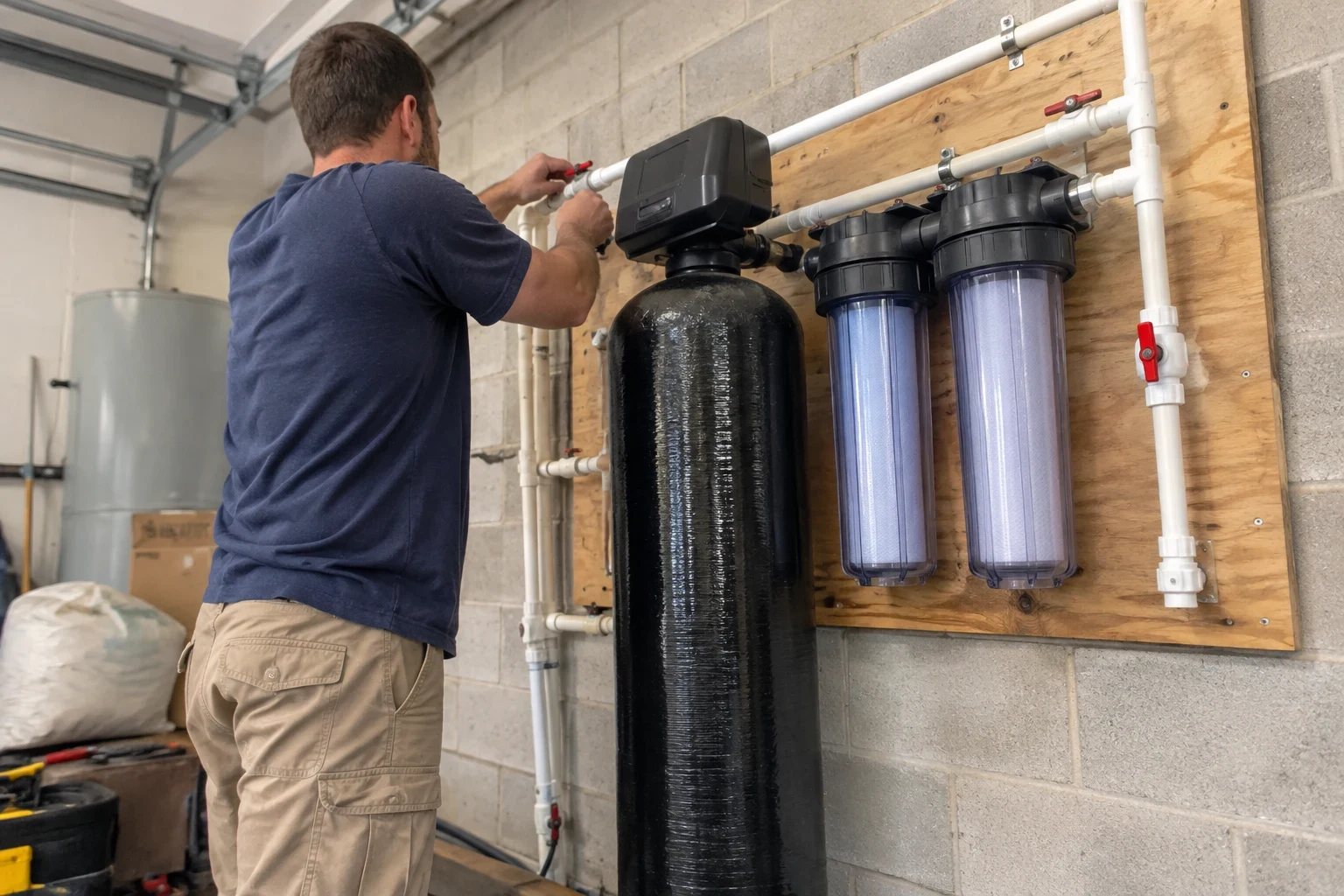
What a whole-home system does, and what goes inside it
This kind of system is installed at the point of entry, the spot where your supply pipe comes into the house, which is usually the garage or the wall beside the water heater. From there on, every fixture gets filtered water, from the kitchen faucet to the washing machine. The tank does the work, and the media inside it decides what is removed and how long the system lasts.
Most homes around Valrico draw treated municipal water. It is safe to drink, but it carries the taste and smell of disinfectant. Some utilities use chlorine and others use chloramine, and the two call for different media. Standard granular carbon handles chlorine well. Chloramine is more stubborn and needs catalytic carbon, which costs more and is worth it only when your water calls for it.
We explain those choices in plain terms. If a whole-home system is not the right fit, we will tell you and point you toward reverse osmosis at the kitchen sink or a water softener instead.
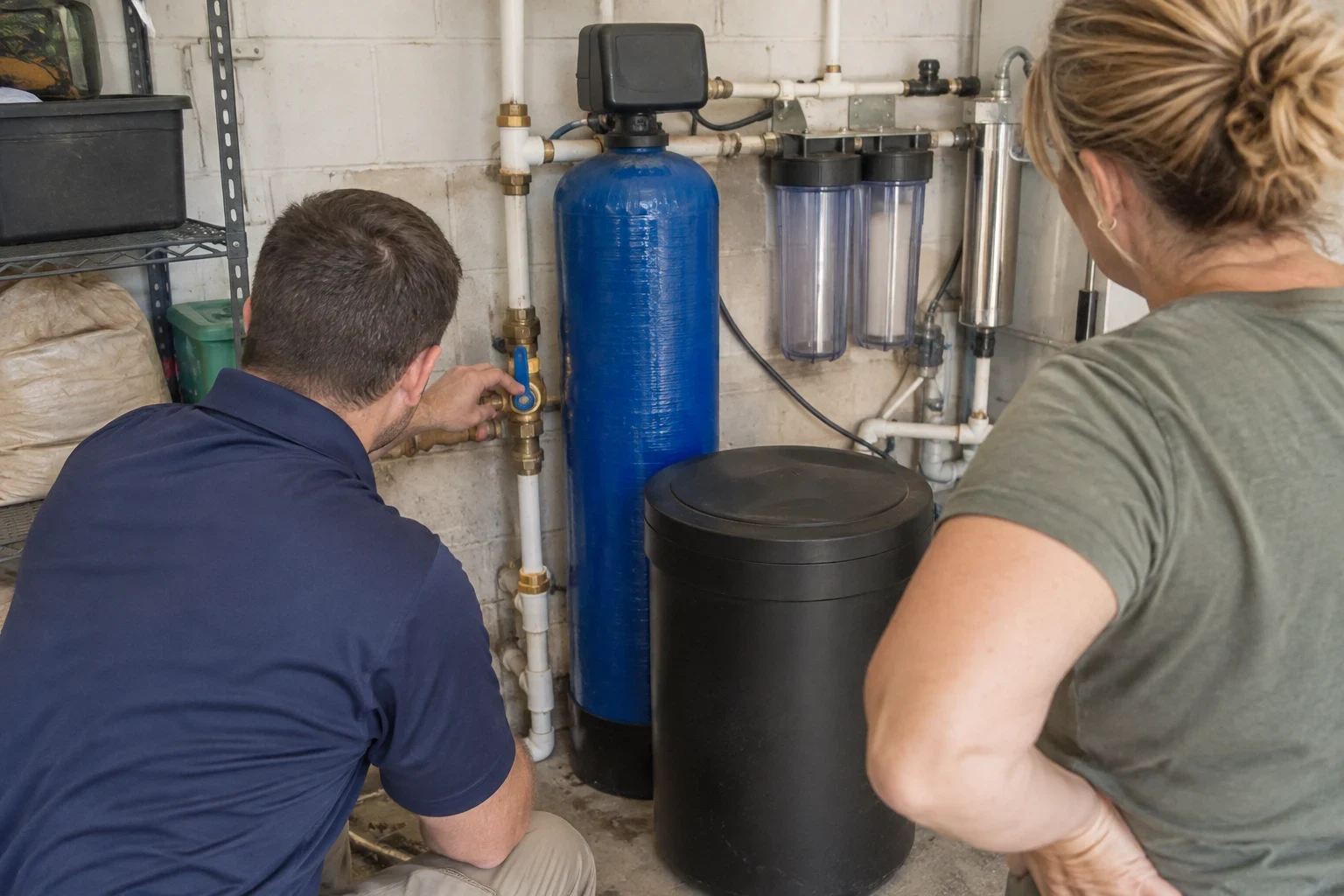
What the installation includes
- 01
Sediment prefilter
A pleated or spun polypropylene cartridge catches sand and grit ahead of the carbon bed. It shields the media and gets changed more often than anything else, so we place it at a comfortable height with clear space around the housing.
- 02
Carbon media tank
The main tank holds granular activated carbon, catalytic carbon or a blend, picked to match how your water is disinfected. Its shell is fiberglass-reinforced over a polyethylene liner, so humidity in a Florida garage will not rust it.
- 03
Control valve and bypass
Some systems use an automatic backwashing valve, others an upflow design that runs without electricity. In both cases we add a bypass, so the tank can be taken offline for service while your home still has water.
- 04
Fittings matched to your plumbing
We connect with the same material your lines already use, whether copper, CPVC or PEX, with brass or stainless fittings at each joint. Straight runs and clearly labeled valves make later service easier for whoever opens it up.
- 05
Flush and cleanup
The tank sits on a level base, and we run water through the new media until it comes out clear. Every joint is checked for drips, and the work area is left as tidy as we found it.
- 06
Support after the install
We offer ongoing customer support for maintenance, filter replacements, and service needs. If a cartridge comes due or the water starts to taste different, one phone call reaches the people who installed your system.
Questions about Whole-Home Filtration?
Call(813) 535-3917Signs your home could use whole-home filtration
A pool smell in the shower
Hot water pushes more of the disinfectant odor into the air. Carbon at the point of entry takes it out before the water ever reaches the bathroom.
Pitcher filters everywhere
If you are filtering at the fridge, the bathroom sink and the coffee maker, one system on the supply line is usually simpler and less to keep track of.
Dry skin and faded laundry
Chlorine is tough on skin, hair and fabric dyes. Removing it where water enters means every shower and every wash cycle uses filtered water.
Debris in faucet screens
Small specks or sandy bits building up in your faucet tips or the washing machine's inlet filters show that particles are moving through the plumbing. A prefilter where the line comes in stops them early and saves wear on valves and appliances.
An old tank that stopped helping
A filter tank that has gone years without fresh media probably holds spent carbon. Our Water Softener & Filtration System Replacement page explains how we replace it properly.
From first call to clear water
- 1
Start with a phone call
You tell us what bothers you about your water, how many bathrooms your home has and where the supply pipe comes in. With that, we can discuss media options and a sensible tank size.
- 2
Choosing the materials
We lay out the trade-offs between standard and catalytic carbon, tank sizes and valve types, then give you a written estimate with each part listed. You decide, and we will not steer you to the largest tank if a smaller one does the job.
- 3
Installation
We shut off the water, cut into the supply line, set the prefilter and tank and add the bypass. You will know in advance when the water will be off, so the day can be planned around it.
- 4
Flush, check and walk-through
We flush the media, test pressure and inspect every joint. Then we show you how the bypass works and how to open the prefilter housing when a cartridge is due.
What shapes the cost
We price each system from the parts it actually needs. Before any work starts, you receive a written estimate that lists media, tank, valve and labor on separate lines. You can see where the money goes, and nothing is added later without your say.
- Carbon type
- Catalytic carbon for chloramine costs more than standard granular carbon. We suggest it only when your water is disinfected with chloramine.
- Tank size and flow
- More bathrooms call for a larger tank, so pressure holds steady when the shower, dishwasher and washer run together.
- Valve design
- An automatic backwashing valve adds cost and needs an outlet close by. An upflow tank runs without power and has fewer parts, though it is best suited to cleaner water with little sediment.
- Where your plumbing comes in
- If the supply pipe enters through an open garage wall, the tie-in is quick. When it runs inside a closet or behind finished drywall, the job takes more time, more pipe and more fittings.
- Extra stages
- Adding a water softener or a drinking-water unit changes the total. Many homes need nothing beyond the carbon tank and a prefilter.
Questions about whole-home filtration
How long does the carbon last before it needs replacing?
A properly sized tank holds enough carbon to run for years, not months. The exact span depends on how much water your home uses and whether the bed is standard or catalytic carbon. The sediment cartridge needs changing sooner, depending on how much grit comes through your line. Through our ongoing customer support, we keep track of what is due and handle the swap when the time comes.
What does the warranty cover?
The whole-home treatment tank is covered by a lifetime warranty. Our installation workmanship is covered for 1 year. Media and cartridges are consumables, so they are replaced as part of routine upkeep rather than under warranty.
Will filtering every tap reduce my water pressure?
A tank sized to your home's flow causes only a small drop, and most families never feel it. When pressure does sag, the usual culprits are a tank that is too small for the house or a prefilter cartridge that has clogged. We size the tank by bathroom count and peak demand, and we place the prefilter where a fresh cartridge goes in within a few minutes.
Does whole-home filtration soften water?
No. Carbon takes out chlorine, chloramine, taste and odor, but it leaves calcium and magnesium in place. If scale on fixtures is the issue, a water softener handles that as its own system, and it can sit right beside the carbon tank.
Do I still need reverse osmosis at the kitchen sink?
Often you do not. Plenty of people are happy drinking carbon-filtered water straight from the faucet. If you would like an extra stage just for drinking and cooking, an under-sink reverse osmosis unit works well alongside a whole-home system.
Where will the tank go?
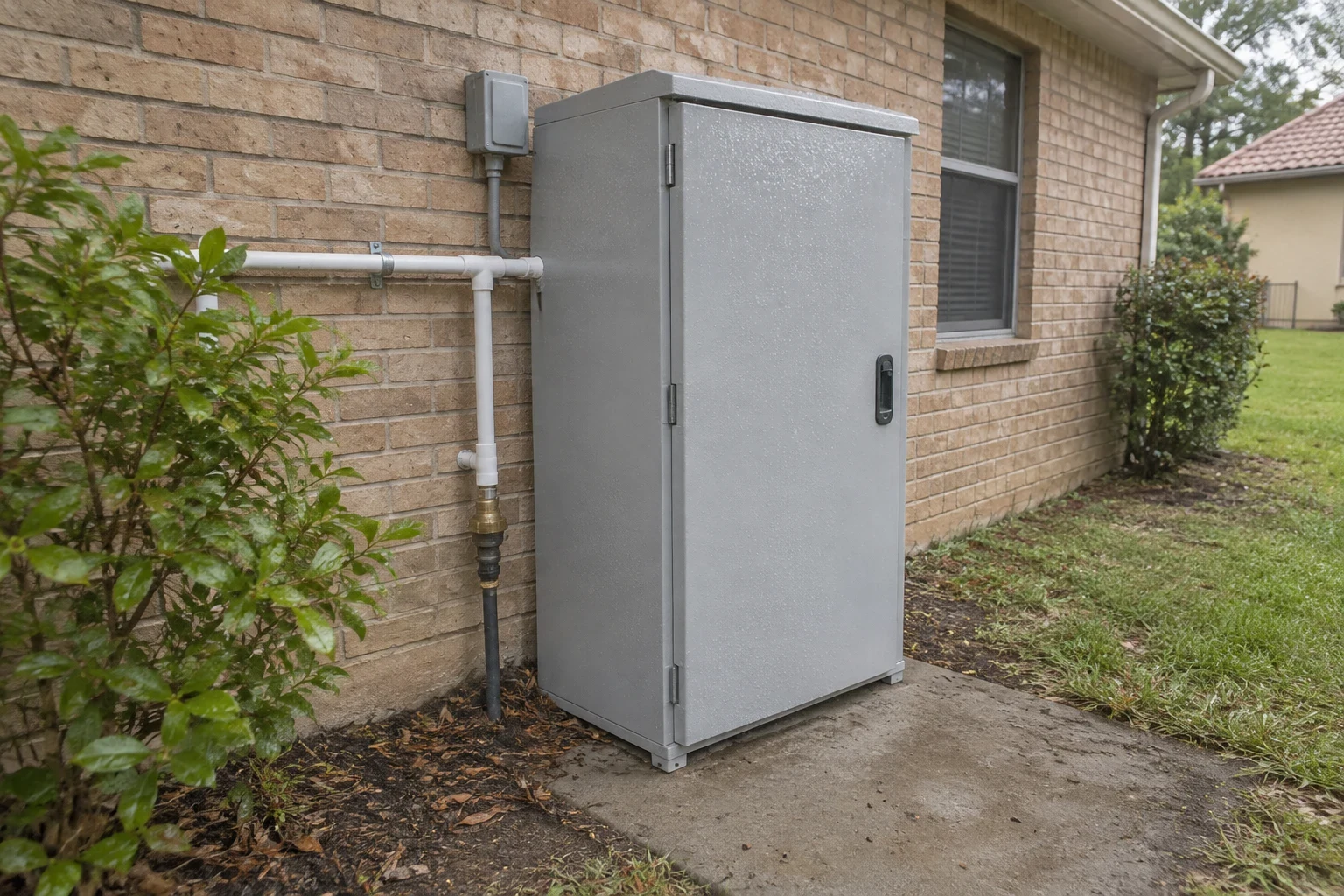
Most often in the garage or along an exterior wall close to where the supply pipe enters. We pick a level spot with space to work around it and away from direct sun, because heat warms the housings and can encourage algae in clear filter cases.
Talk through your filter options
Describe the taste, smell or residue that bothers you and where your water supply comes into the house. We will explain which media and tank fit, and what each choice costs to own over the years.