ServicesSoftener Repair & Maintenance
Water Softener Repair & Maintenance in Valrico
When a softener stops softening, the cause is usually one part: a clogged injector, a worn seal, a salt bridge or resin that has run its course. We find which one, explain the materials involved and repair what is worth repairing in your home.
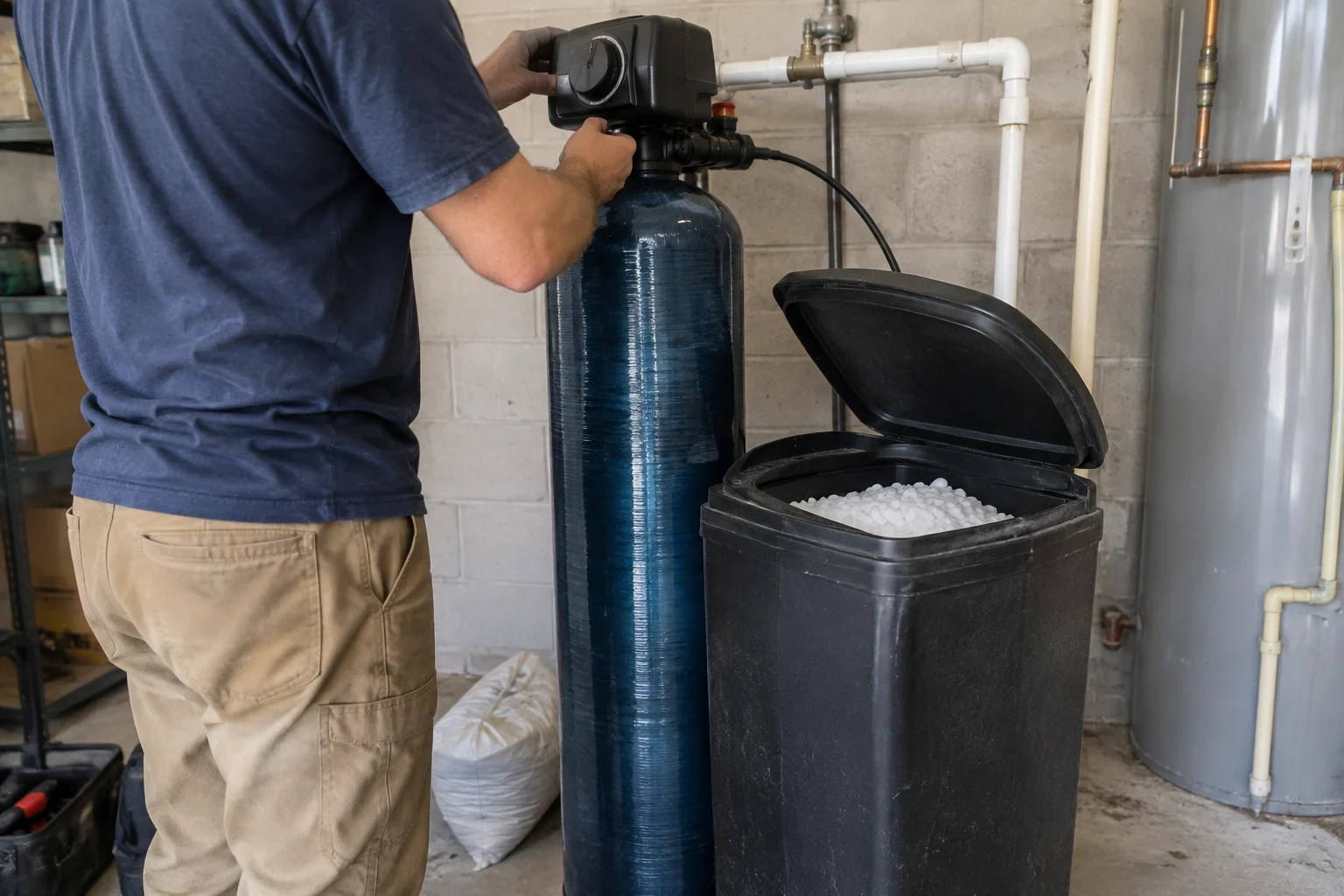
Keeping the softener you already own working well
A water softener is a simple machine built from a few materials that age at different rates. The resin bed can last many years. The rubber seals and spacers in the control valve wear sooner. The brine tank and float just need to stay clean. Most problems trace back to one of these, and a careful repair is often the sensible choice.
We look at each part before recommending anything. If the resin is sound and the valve only needs a seal kit, that is what we suggest. If the tank or valve is past saving, we say so plainly and walk you through Water Softener & Filtration System Replacement instead.
Florida garages run warm and humid much of the year, which is hard on salt and brine tanks. Regular maintenance keeps that from turning into hard water at the tap.
What a repair and maintenance visit covers
Control valve inspection
We check the timer or metered head, the piston, seals and spacers. Worn rubber lets water bypass the resin, so the softener seems to run while hard water slips through.
Injector and screen cleaning
The injector draws brine from the salt tank. A small amount of sediment or salt mush can block it, and regeneration then does little. Cleaning it is often the whole fix.
Brine tank and salt check
We break up salt bridges, clear mushy salt from the bottom and look at the float and brine line. We also talk through salt choices: evaporated pellets stay cleaner than rock salt, and potassium chloride works for those avoiding sodium at a higher running cost.
Resin condition
Iron in the water can coat the resin beads, and years of chlorine exposure slowly weakens them. We watch how the bed handles a regeneration cycle, then tell you whether a resin cleaner, a rebed or a full replacement is the sensible step.
Settings and regeneration schedule
We confirm the hardness setting, household size and regeneration timing so the unit uses salt and water efficiently rather than by guesswork.
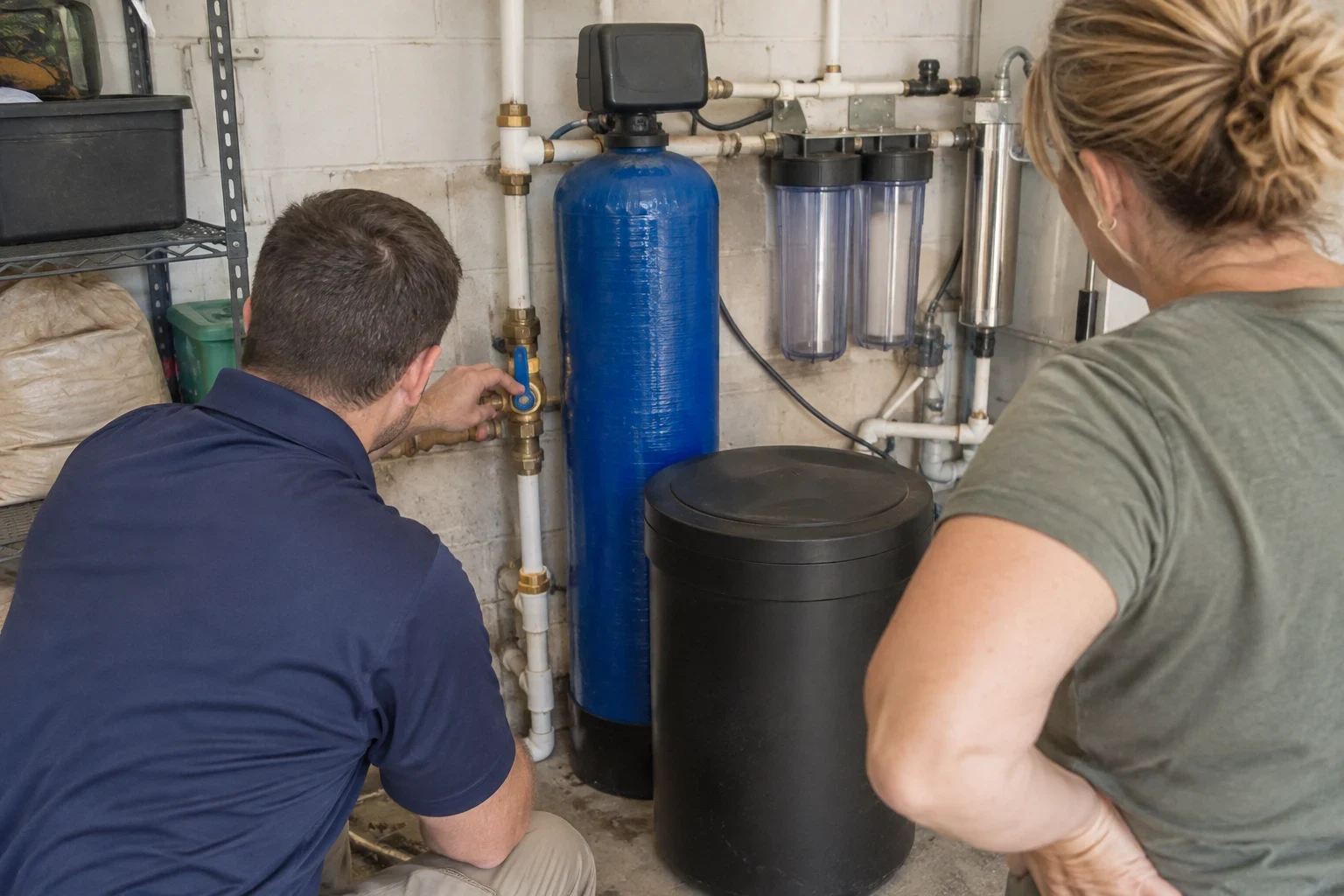
Signs your softener needs attention
- Spots and scale return
- White film on glass shower doors, or scale on faucet aerators, suggests the resin is not exchanging as it should.
- Salt level never drops
- If the salt sits at the same height for weeks, a crust may have formed above the water line. The unit is regenerating with plain water.
- Water in the brine tank is high
- Standing water well above the salt often points to a blocked injector, a stuck float or a kinked brine line.
- Low pressure through the house
- Crushed or fouled resin, or a clogged distributor at the bottom of the tank, can choke the flow to every faucet.
- Constant draining or noise
- A valve that cycles at odd hours or never stops sending water to the drain usually has a worn piston seal or a failing motor.
How the visit runs
- 1
Start with a phone call
Let us know the symptoms and, if it is handy, the brand and model printed on the valve head. With that, we can arrive carrying the seal kits and parts your unit most likely needs.
- 2
Inspection at your home
We put down a mat near the unit, bypass it, and look at the valve, injector, brine tank and resin. You see what we find.
- 3
An honest recommendation
We explain the repair, the parts and materials involved, and whether the unit is worth the money. You decide before we start.
- 4
Repair, reset and cleanup
We complete the work, run a manual regeneration, set the controls and wipe down the area. We leave the bypass in service position and show you how to use it.
What shapes the cost of a repair
Repairs vary because softeners vary. A cleaned injector costs little in parts, while a new resin bed or control valve is a larger job. We explain the cost by phone and in person before any work begins, so the decision stays with you.
- Which part has failed
- Seals, injectors and floats are small parts. Motors, circuit boards and full valve heads cost more.
- Resin type and volume
- Rebedding a tank depends on how many cubic feet it holds and the resin chosen. A higher crosslink resin resists chlorine better and costs more.
- Parts availability for your model
- Common valve brands are easy to source. Older or proprietary units can take longer to supply and cost more to repair.
- Condition of the brine tank
- A cracked tank or badly scaled brine well adds parts and time to the visit.
Softener repair questions
- Is it worth repairing an older softener?
- Often, yes. A sound tank and resin bed with a worn valve can run well for years after a seal kit or new piston. If the resin is spent and the valve is obsolete, replacement usually makes more sense, and we will tell you that directly.
- Which salt should I use?
- Evaporated salt pellets are the cleanest and least prone to mush in a humid garage. Solar salt works for many homes. Rock salt carries more insoluble material that builds up in the brine tank, and potassium chloride is an option if you want to avoid sodium.
- How often should a softener be serviced?
- A yearly look at the valve, injector and brine tank keeps most units running well. Homes on well water with iron may need resin cleaning more often. Between visits, you can reach us by phone for maintenance, filter replacements and any other service your system needs.
- Do you service softeners you did not install?
- Yes. We work on most common makes. If parts for a particular model are hard to find, we explain that before starting so you can weigh the options.
- What warranty applies if I end up replacing the system?
- Installation work on a new system from us is covered by a 1-year workmanship warranty. The whole-home treatment tank itself carries a lifetime warranty.
Find out what your softener needs
Describe the spots, the salt level or the noise, and we will walk through what usually causes it and which parts are likely involved. You get the full picture before deciding on any repair.