ServicesSystem Replacement
Water Softener & Filtration System Replacement in Valrico
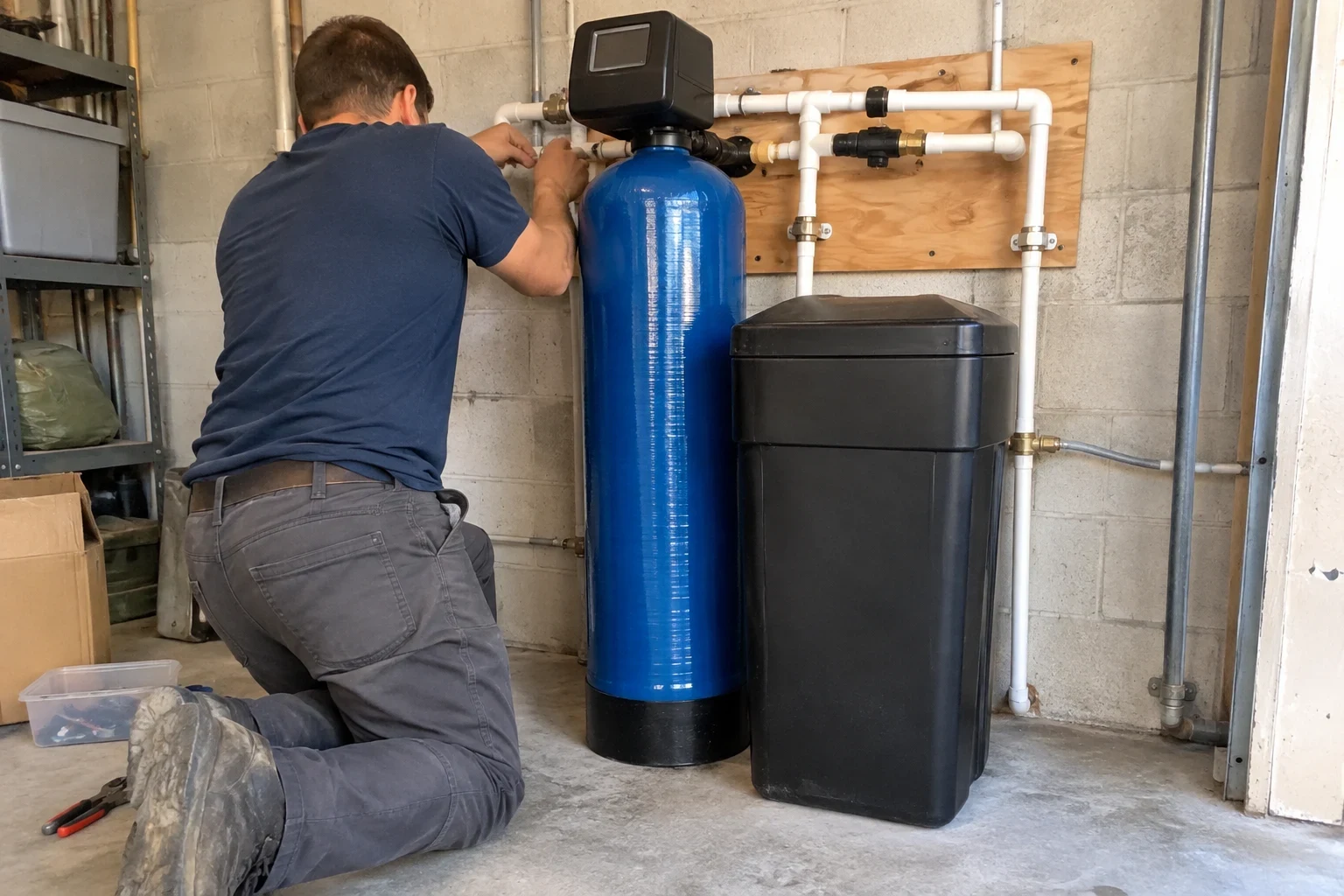
When an older softener or whole-home filter stops keeping up, we take it out and fit a new system sized for your home. Before anything is ordered, we explain the tank, media and valve options in plain terms so you choose with a clear view of the trade-offs.
Knowing when a new system is the better choice
A softener or whole-home filter can run well for many years, but there comes a time when each new part or media change buys less and less. At that stage we take out the old unit and install a system sized to your home and the way your household uses water. If a repair would still do the job, we say so, and our Water Softener Repair & Maintenance service handles that work instead.
A replacement is also a good time to rethink materials. Many older units were built with steel tanks, mechanical timers and standard resin. Composite tanks do not rust, metered valves regenerate only after you have used the water, and today there are more filter media to choose from. We go through each option and what it means for upkeep.
Around Valrico, many systems sit in a garage that stays hot for much of the year, which wears on plastic housings and valve seals. We think through where the new unit goes and how it is supported, so it lasts longer.
What a replacement includes
- Careful removal of the old equipment
- We bypass and drain the old system, disconnect it and carry out the tanks, brine tank and spent media. You are not left with a heavy unit sitting in the garage.
- Tanks and media matched to your home
- We favor composite tanks with a polyethylene liner wrapped in fiberglass, which will not rust at the seams the way steel can. For softeners on chlorinated water, a higher crosslink resin holds up longer. For filtration, catalytic carbon handles chloramine better than standard granular carbon, and we explain why that matters for your water.
- A control valve suited to how you live
- A metered valve tracks the gallons you use and regenerates only when needed, which saves salt and water. A simpler timer valve can suit a small, steady household. We show you both and recommend one.
- Clean, code-minded plumbing connections
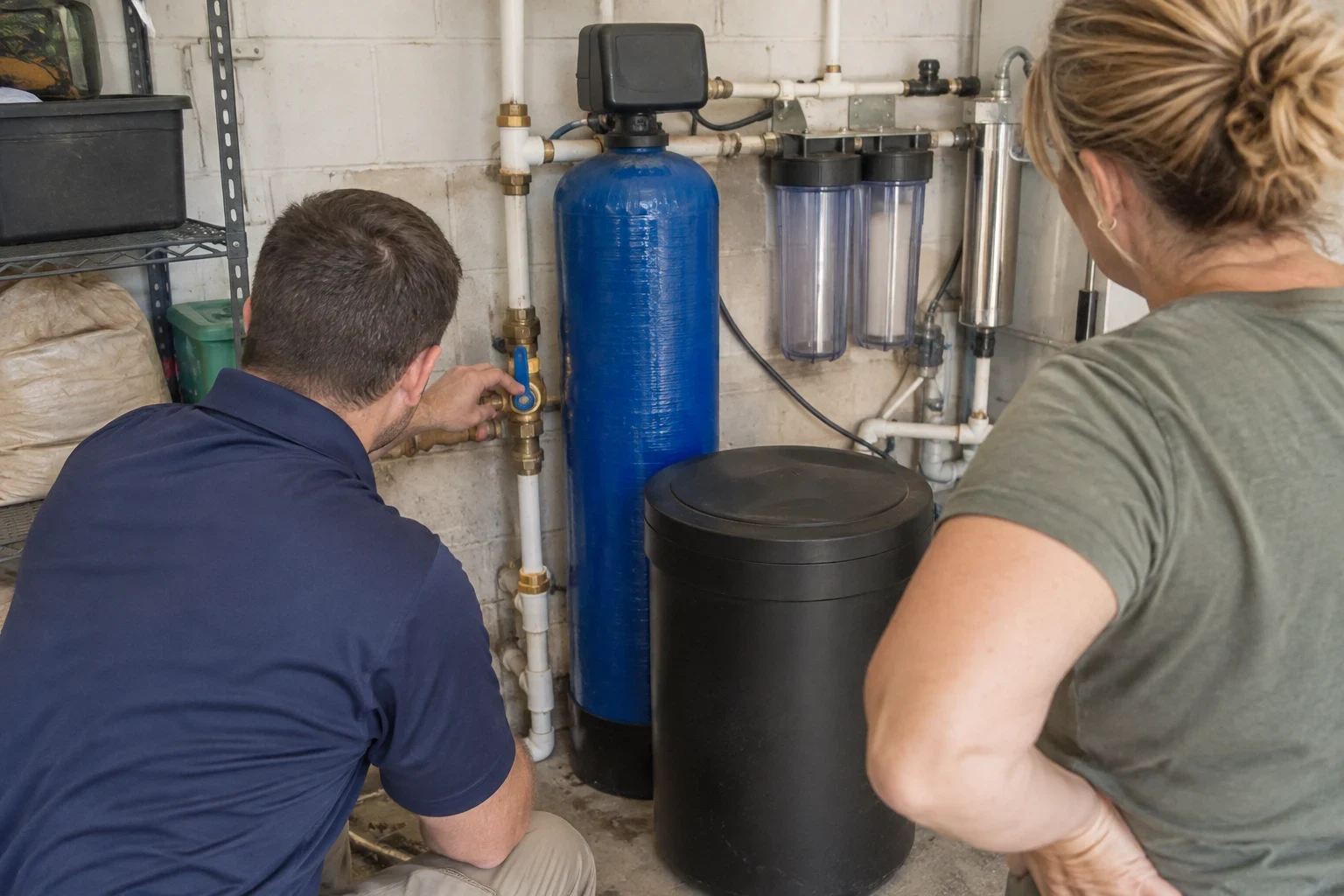
- We match your existing pipe, whether copper, CPVC or PEX, and fit a new bypass valve so the system can be isolated later. Drain lines get a proper air gap.
- Startup and a walkthrough
- We flush the new media, program the valve and check every joint for leaks under full pressure. Then we show you how to bypass the system and where to add salt.
- Warranty coverage
- The new whole-home treatment tank carries a lifetime warranty. Our installation work is backed by a 1-year workmanship warranty, so the connections and setup are covered too.
Signs your system is due for replacement
Rust, cracks or weeping on the tank
Steel tanks tend to rust at the seams, and a hairline crack in an older tank can leak slowly for months before anyone notices. Once the shell itself is failing, replacement is the sensible answer.
Spots and scale return after regeneration
If glassware spots and fixtures crust over even though the salt is going down, the resin is likely worn or fouled. Chlorine in city water slowly breaks resin beads down over the years.
The valve keeps needing parts
Repeated repairs on the same control head, or parts that are no longer made, usually mean the money is better spent on a new valve and tank together.
Taste and odor come back soon after service
When a fresh media change only helps for a short while, the carbon bed may be undersized or channeling. A properly sized tank fixes the cause rather than the symptom.
Your household has outgrown it
An extra bathroom or more people at home can push an old system past its capacity. Pressure that drops when two showers run is a common clue.
What moves the price of a replacement
Every replacement is priced from what your home needs and what the install involves. Your written estimate lists each item before work begins, so the final number holds no surprises. These are the main things that shape it.
System type and size
Replacing a softener alone costs differently from replacing a whole-home filter, or both together. Larger homes and higher water use call for bigger tanks and more media.
Tank and media materials
Catalytic carbon, higher crosslink resin and composite tanks each carry a different cost. We explain where the extra spend earns its keep and where standard materials are enough.
Valve choice
Metered valves with more settings cost more up front than basic timers but often use less salt and water over time.
Plumbing changes
Moving the system, rerouting pipe, adding a drain line or replacing corroded fittings near the old unit all add labor and parts.
Removal and access
Heavy old tanks, tight closets and awkward garage layouts take more time to work around.
How a replacement unfolds
- 1
A conversation by phone
You tell us what you have, roughly how old it is and what you have noticed. That helps us know what to look for before we arrive.
- 2
A look at your setup
We visit, check the plumbing, drain, power outlet and available space, and go over the tank, media and valve choices with you. You get a written estimate with each line spelled out before any work starts.
- 3
Installation day
We lay down floor protection, shut the water and swap the equipment. Your water is off only while the connections are being made, not for the whole visit.
- 4
Startup and cleanup
We flush and program the system, recheck every fitting, haul the old unit away and leave the area clean. Before we go, you know how to bypass it and what upkeep to expect.
Replacement questions we hear
Can you reuse my brine tank or bypass valve?
Sometimes. If the brine tank has no cracks, the float moves freely and the fittings match the new valve, we can keep it. We will not reuse a part that is likely to fail soon after the new system goes in, and we tell you which parts are worth keeping.
Should I replace my softener and filter at the same time?
If both are near the end of their life, one visit is simpler and means less disruption in your home. A carbon filter placed ahead of a softener also shields the new resin from chlorine. If only one unit is worn, we replace just that one.
Will my water be off all day?
No. The water is shut off only while we cut in the new connections. The rest of the work happens with the system in bypass wherever the plumbing allows it.
How long does the install take?
Most replacements are finished in a single visit. Extra plumbing, a new drain line or a system moved to a different spot can add time, and we tell you that when we look at your setup.
Do you take the old equipment away?
Yes. Hauling out the old tanks, brine tank and spent media is part of the job, so nothing heavy is left behind in your garage.
Who do I call once the new system is running?
Us. Our ongoing customer support for maintenance, filter replacements, and service needs carries on after installation day. When salt bridges, a cartridge is due or a setting needs a change, the same phone number reaches the people who installed it.
Ready to retire an aging system
Tell us what you have now and what is bothering you about your water. We will explain the material options and set a time to look at your setup.