ServicesReverse Osmosis
Reverse Osmosis Systems in Valrico
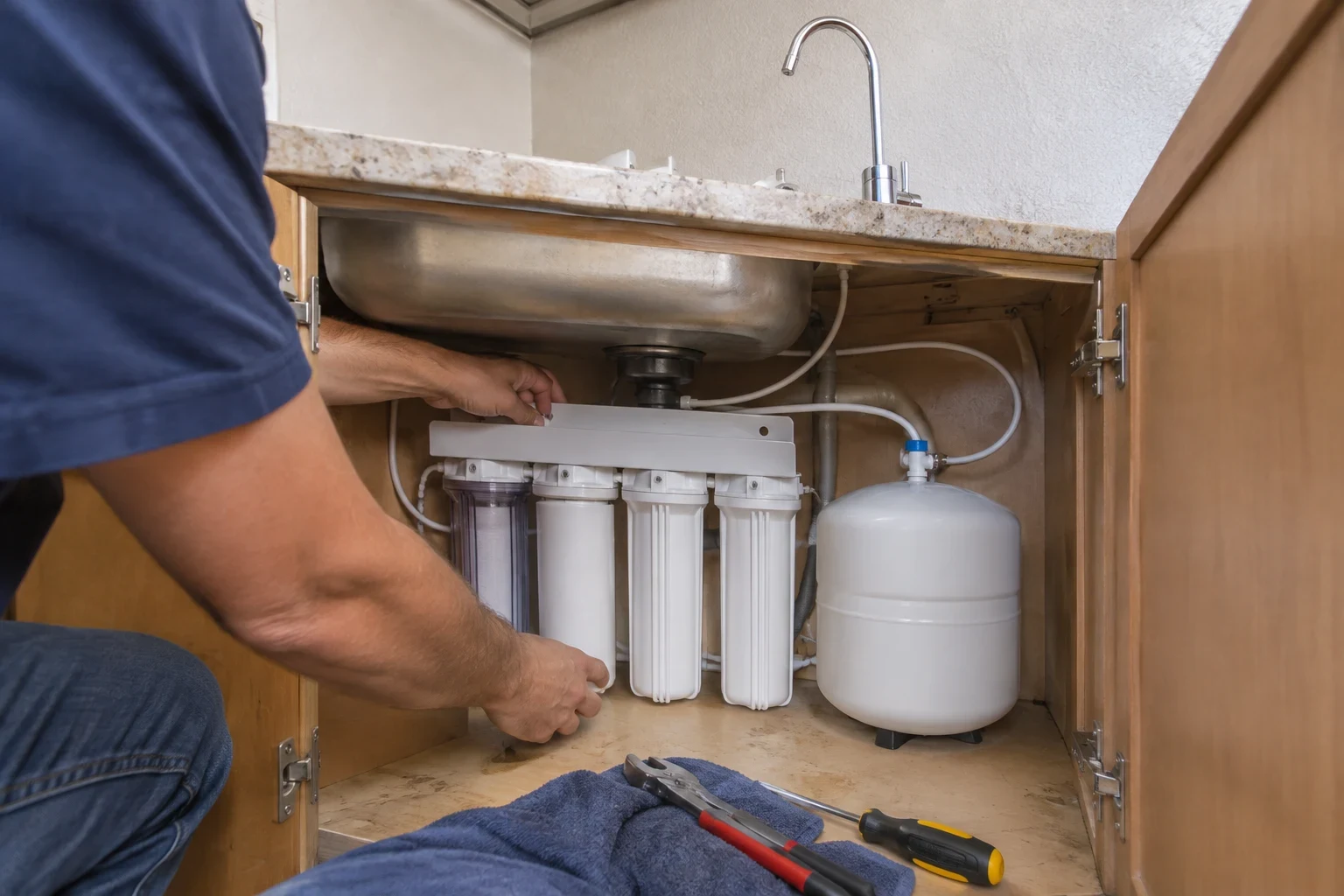
Reverse osmosis adds a separate faucet at your kitchen sink that pours purified water for your morning coffee, the pasta pot and every glass you fill. We fit the system neatly under the sink and show you each part first, from the membrane to the faucet finish, so the choice stays yours.
What reverse osmosis does, and when it makes sense
At the heart of a reverse osmosis system is a membrane so fine that household pressure forces only water molecules through it, while a carbon filter's openings are coarse by comparison. Dissolved minerals, salts and many trace metals stay behind and are rinsed away, and the purified water travels to a faucet of its own beside your sink. Since the system serves just that one tap, it treats what you drink and cook with, and your shower and washing machine carry on using the main supply exactly as they do now.
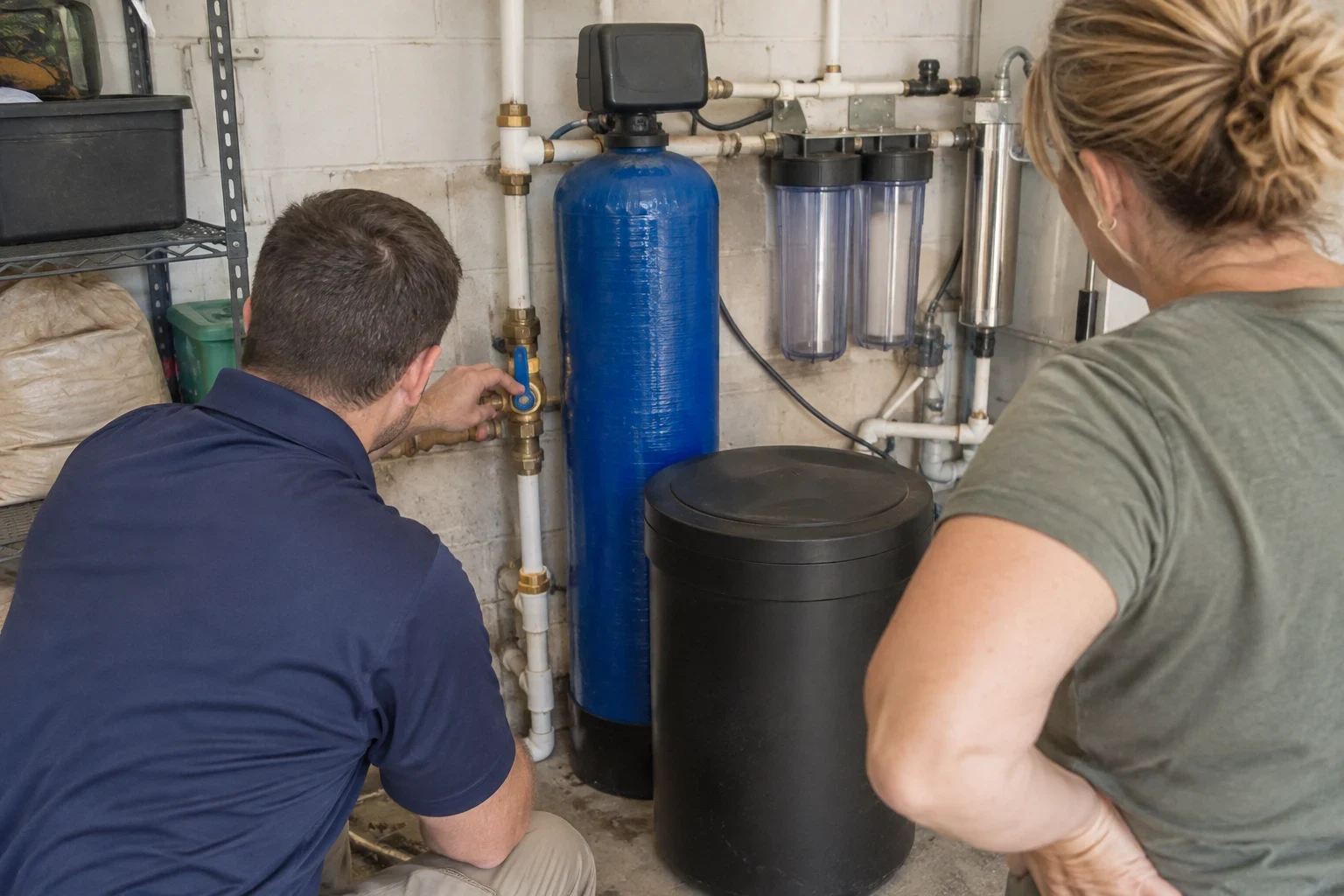
Choose it when you want the purest water at a single tap, when metals from older plumbing worry you, or when hauling cases of bottled water home has worn thin. If the real complaint is a chlorine smell in every room, whole-home filtration or our chlorine and chloramine removal work usually comes first. Plenty of homes end up with both, and we will say plainly which one fixes the problem in front of you.
What goes into an installation
- 01
Sediment and carbon prefilters
A spun polypropylene sediment cartridge catches grit first. A carbon block follows to take out chlorine, which protects the membrane and improves taste.
- 02
The membrane itself
Most systems we fit use a thin-film composite membrane. It rejects more dissolved solids than older cellulose triacetate membranes, but it does not tolerate chlorine, so the carbon stage in front of it matters.
- 03
Storage tank or tankless unit
A traditional system holds treated water in a steel tank with a butyl rubber bladder, which keeps it ready under pressure. Tankless units use an electric pump instead, take less cabinet space and deliver water on demand. We compare both against your cabinet and your habits.
- 04
Optional remineralizing stage
Some people find very pure water tastes flat. A calcite or mineral cartridge after the membrane adds back a little calcium and magnesium for a softer, rounder taste.
- 05
Dedicated faucet in your finish
The faucet is the part you see every day. We offer finishes such as chrome, brushed nickel and matte black, chosen to sit well beside your main kitchen faucet.
- 06
Clean tubing and drain connection
Food-grade polyethylene tubing runs neatly through the cabinet, and the drain line connects with a proper air-gap or drain saddle so wastewater leaves cleanly.
Questions about Reverse Osmosis?
Call(813) 535-3917Signs a reverse osmosis system is worth considering
You buy bottled water every week
An RO tap replaces the cases, the plastic and the trips to the store with water you draw at the sink.
Coffee and ice taste off
Dissolved minerals and residual disinfectant change how coffee, tea and ice cubes taste. RO water lets the flavor come through cleanly.
White spots on kettles and glassware
Chalky rings in a kettle or on drinking glasses come from minerals carried in the water. The membrane strips out the bulk of them before they reach your cup or cooking pot.
Older plumbing in your home
In homes with aging pipes or fittings, metals can leach into water after it leaves the main. An RO system at the kitchen tap adds a strong layer of protection where it counts.
Your current filter barely helps
A pitcher or faucet-mount filter improves taste but does little for dissolved solids. If you want more than taste, a membrane is the next step.
How the work runs on installation day
- 1
A conversation by phone
We start by asking how you use your water, what bothers you about it and what is under your kitchen sink now. From there we suggest a system and walk through the membrane, tank and faucet choices.
- 2
Measuring the cabinet
On arrival we check cabinet depth, the location of the disposal, and the cold water and drain lines. This decides between a tank and a tankless unit and where each part sits.
- 3
Installation with the cabinet protected
We lay down a mat, drill the faucet hole cleanly in the sink or countertop, mount the filter housings and route the tubing tidily. Most installs take a few hours.
- 4
Flushing and checking
New membranes and carbon need a flush before the water is ready to drink. We run the system, check every fitting for drips and make sure the tank fills properly.
- 5
Handover and filter schedule
We show you how to read the system, when each cartridge is due and how a change works. We tidy up and leave your cabinet cleaner than we found it.
What shapes the cost of a reverse osmosis system
We give you a clear, itemized quote by phone once we know which system fits your home. The price comes down to the parts you choose and how your kitchen is set up, not to add-ons you did not ask for.
- Tank or tankless design
- A conventional tank system is simpler. Tankless units with an electric pump cost more but save cabinet space and refill faster.
- Number of stages
- A basic system has sediment, carbon and membrane stages. A remineralizing cartridge or an added polishing filter raises the price and the number of cartridges you replace later.
- Faucet finish and countertop material
- Designer finishes cost more than standard chrome. Drilling through quartz or granite takes more time and care than an existing sink hole.
- Cabinet layout and connections
- A crowded cabinet, a garbage disposal in the way or a refrigerator ice-maker line adds time and fittings.
Reverse osmosis questions we hear often
How much water goes down the drain with reverse osmosis?
Part of the incoming flow is always used to rinse the membrane clean, and that portion leaves through the drain line. Current designs, tankless pump units in particular, send far less to the drain than the systems of a decade or two ago. Before you decide, we tell you the expected ratio for the model we suggest, so the number holds no surprises.
How often do the filters and membrane need changing?
Most homes swap the sediment and carbon prefilters about once a year, or a little sooner if the tap sees heavy use. The membrane outlasts them, often by a few years, since the prefilters shield it from grit and chlorine. Our ongoing customer support covers maintenance, filter replacements, and service needs. When a cartridge comes due, one phone call to us gets it handled.
Can the RO system feed my refrigerator's ice maker?
Yes, in most kitchens. We run a tubing line from the system to the refrigerator connection. Tank systems sometimes need a booster for strong ice-maker flow, and we will check that during the visit.
Is there a warranty on the installation?
Yes. Our installation work comes with a 1-year workmanship warranty, so if a fitting we made weeps or a connection we routed gives trouble in that first year, we come back and put it right.
Should I get reverse osmosis or a water softener?
They solve different problems. A softener treats hardness throughout your home to protect fixtures and appliances, while RO purifies drinking water at one tap. If hardness is the issue, our water softeners page explains that side, and some homes use both.
Choose your system with the details in front of you
Tell us about your kitchen and how you use your water, and we will walk you through membranes, tanks and finishes before you decide. Your quote comes by phone, line by line.