ServicesWater Softeners
Water Softeners in Valrico
We install water softeners chosen part by part: the resin, the tank, the control valve and the salt that suits you. We size the system to your water and your household, fit it neatly, and explain what each choice means for upkeep before any work begins.
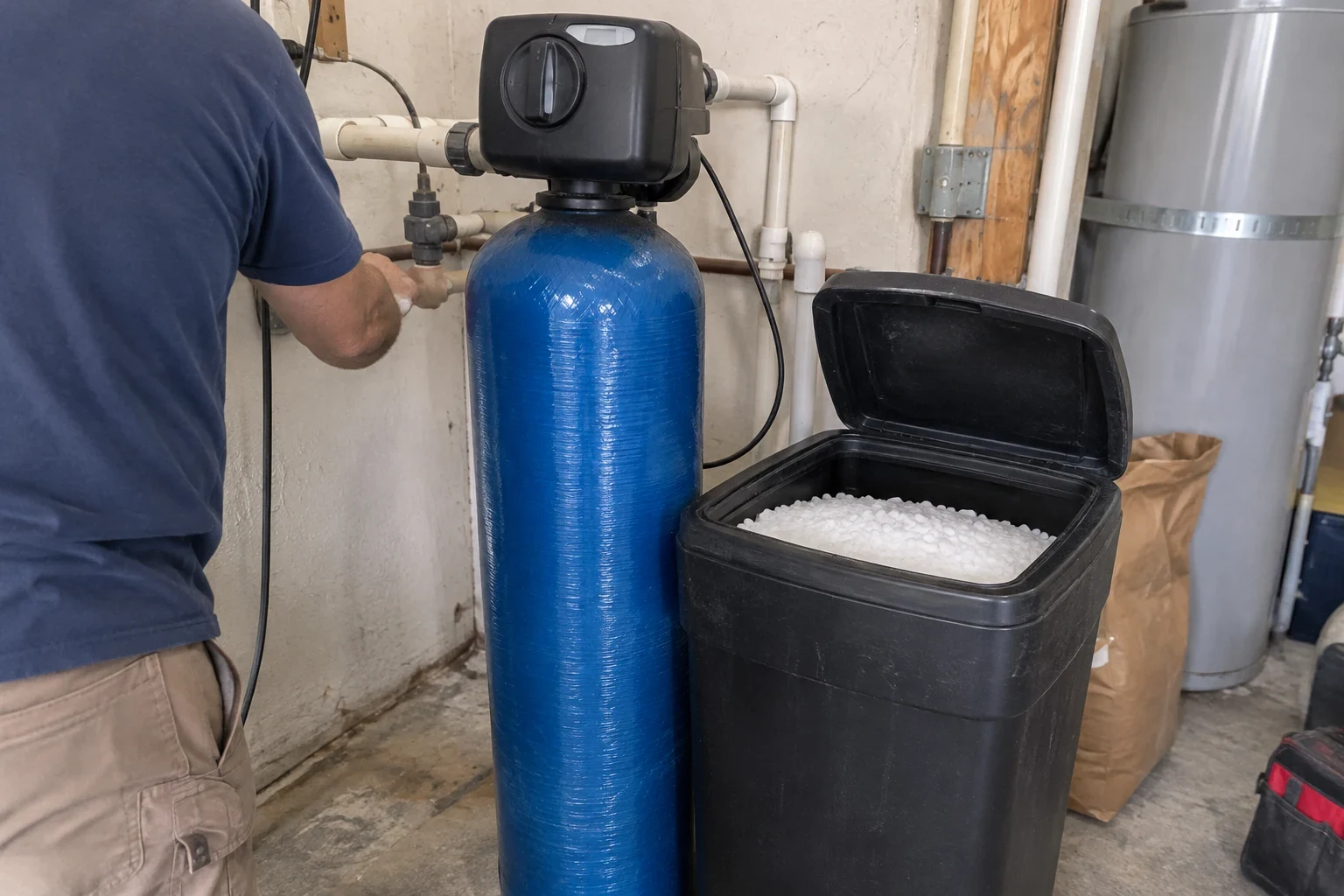
What a softener does, and when it is the right call
Inside a softener, water flows through a bed of small resin beads that hold on to calcium and magnesium and release sodium or potassium in their place. With those minerals gone, scale stops forming in your water heater, on glass shower doors and around faucets. A softener will not take out chlorine, odors or most other contaminants; whole-home filtration or reverse osmosis handles those.
Water drawn from Florida's limestone aquifer often carries a good load of dissolved minerals, so softening is worth asking about in many homes. Still, it is not the answer everywhere. When the hardness figures for your supply look modest, we say so honestly and point you toward a system that does more for your water than a softener would.
When softening is the right answer, performance and service life depend on what the system is built from. We explain each component in plain terms so you can see where your money goes.
The parts we fit, and why
A resin grade matched to your supply
Most homes do well with standard 8 percent crosslink resin. On chlorinated municipal water we usually suggest 10 percent crosslink instead, because it resists chlorine better and the beads tend to hold together for more years.
A lined tank that will not rust
Your resin is housed in a fiberglass-reinforced vessel with a polyethylene inner liner. Rust is not a concern, and the tank tolerates a hot Florida garage. We pick the size from your hardness and household so the system does not regenerate more than it needs to.
A metered control valve
This valve tracks the gallons your home actually uses and regenerates when the resin is close to spent. Compared with an older timer valve, it uses less salt and water, and it adjusts on its own when you have guests or travel.
Brine tank setup and salt choices
We place the brine tank and lay out the salt options. Evaporated pellets leave the least residue, solar crystals are cheaper but dirtier in the tank, and potassium chloride skips the added sodium for a higher cost per bag.
Bypass, drain line and tidy plumbing
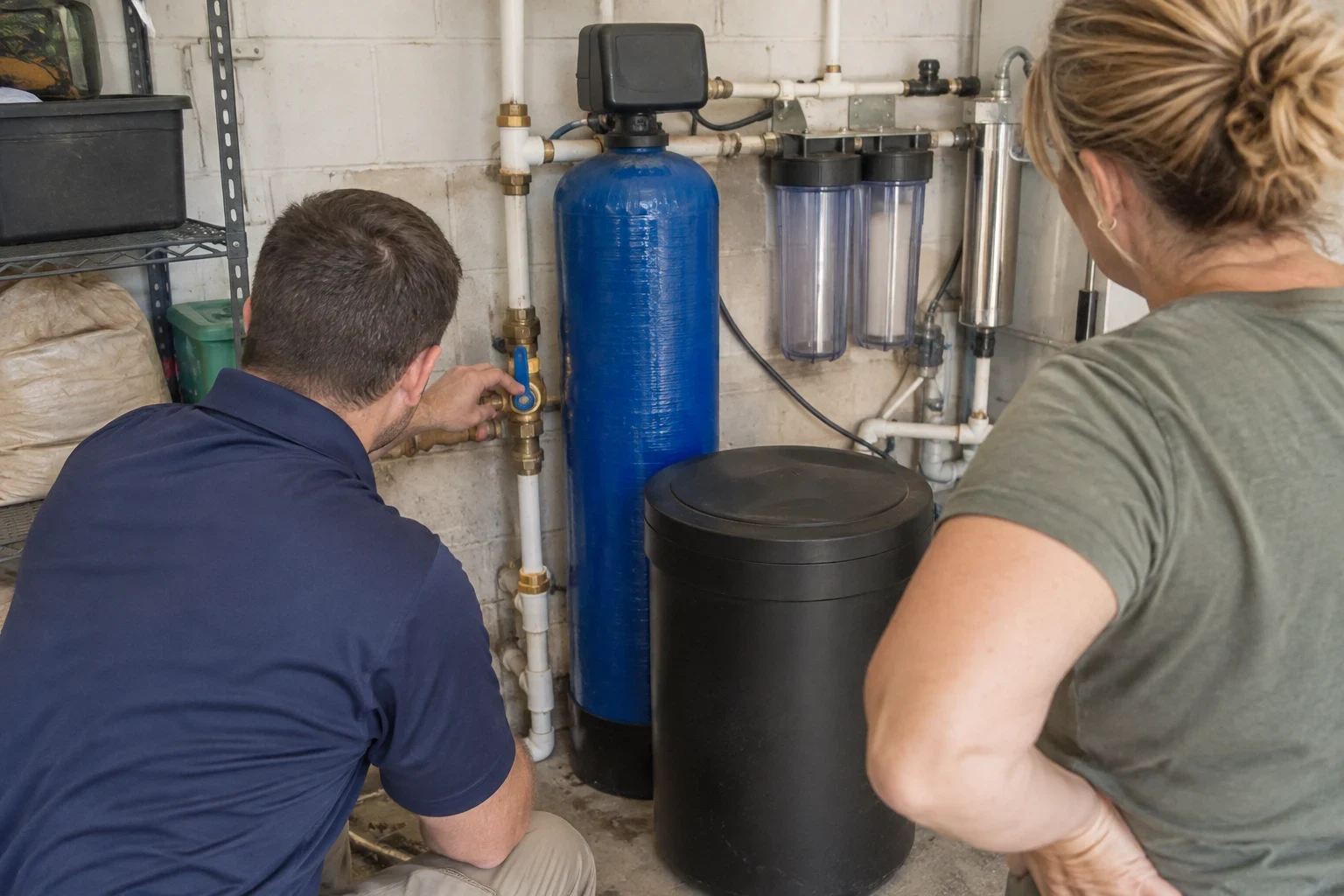
Each install has a bypass valve for isolating the softener and a drain line with a proper air gap. Connections are made to suit the copper, PEX or CPVC already in your home, and we clean up the work area before we go.
Signs your home could use a softener
- Chalky rings around fixtures
- A pale, crusty edge on faucets and showerheads that comes back days after cleaning is mineral scale. Most people spot it here first.
- Spotty dishes and hazy glass
- As hard water dries, it leaves a mineral film behind. When rinse aid and a squeegee cannot keep up, the minerals are to blame.
- Soap that barely foams
- Calcium and magnesium react with soap, so you reach for more shampoo and detergent. Towels and clothes may also come out of the wash feeling rough.
- A noisy or complaining water heater
- Crackling from a tank heater, or descale warnings on a tankless unit, generally means scale is collecting inside. Ignored, it cuts the heater's working life short.
- A softener that has fallen behind
- When you already have a softener and the symptoms return, worn resin or a tired valve may be the cause. Our water softener repair and maintenance page explains what is fixable.
How the work goes
- 1
A conversation by phone
We ask where your water comes from, how many people live in your home, whether you have hardness figures from your utility or an earlier report, and what problems you have noticed. That is usually enough to say whether a softener is worth it.
- 2
Checking where it will sit
Many homes around Valrico have a plumbing loop in the garage, though some do not. We confirm the path of the main line, find the nearest drain and outlet, and measure the space for the brine tank.
- 3
Installation day
We turn off the water, cut in the bypass and the softener, and route the drain and brine lines. If the job requires a permit, we pull it. Your water is typically off for just a portion of the visit.
- 4
Startup and handover
We set the valve for your hardness and household, then run the first regeneration together. Before we leave, we demonstrate refilling the brine tank and switching to bypass, and we describe what normal operation looks and sounds like.
What moves the cost of a softener
Two things set the price: the components inside the system and the plumbing it connects to. We learn about both before we quote. When you get your quote by phone, the tank, resin and valve are named one by one, so you can compare our numbers against any other offer on equal terms.
- Hardness and household size
- Harder water and a bigger household call for more grain capacity. That means a larger tank holding more resin.
- Resin grade and valve type
- Chlorine-resistant resin and a metered valve cost more on day one. Over the years they tend to pay some of that back in fewer resin changes and less salt.
- The install location
- A ready garage loop keeps the labor straightforward. Extending lines to reach a sensible spot, or fitting the system into a cramped closet, takes more hours and more fittings.
- An existing unit to remove
- Disconnecting an old softener and carrying it away adds a modest amount to the visit. Our water softener and filtration system replacement page goes into that work further.
- Well water that needs a pre-filter
- Iron or sulfur from a private well can coat and foul resin beads, so some wells need a filter installed upstream of the softener. Our well water treatment page explains those choices.
Water softener questions
- Will softened water add a lot of sodium to my drinking water?
- Some sodium is added, and the amount tracks how hard your water was before softening. For most people it is minor. Potassium chloride salt avoids it, and a reverse osmosis system at the kitchen sink takes most of it back out of the water you drink and cook with.
- How often will I need to add salt?
- With a metered valve, many households top up the brine tank every month or two. Harder water, heavier daily use or a smaller brine tank will shorten that stretch, while a light-use home may go longer. At setup we show you where to look to check the salt level at a glance, so the tank never runs empty without you noticing.
- Can the softener go outside?
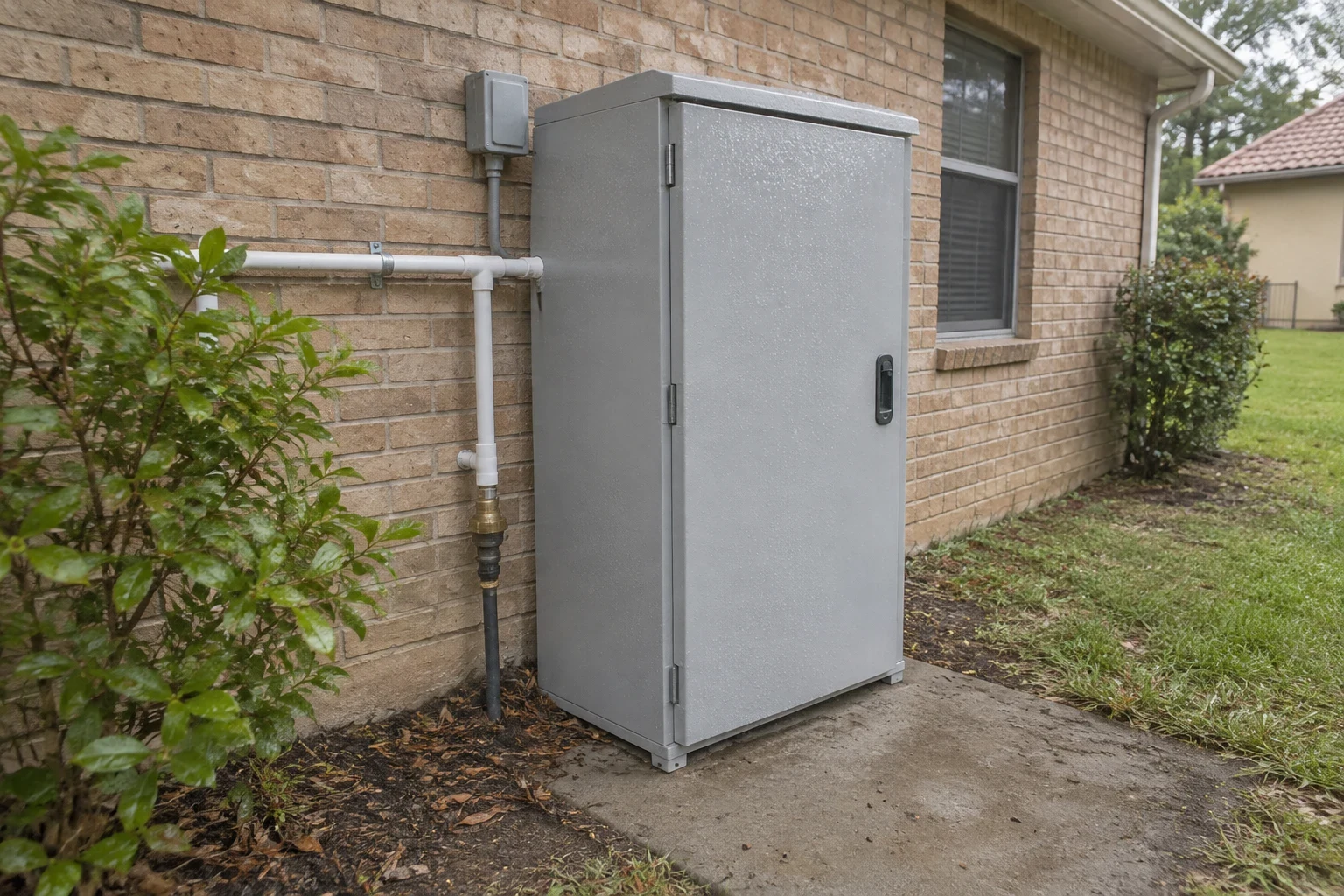
- Yes, though steady Florida sun degrades plastic housings and some valve components over time. If the only workable spot is outdoors, we discuss a cover or a shaded position so the system lasts.
- What warranty comes with it?
- The whole-home treatment tank is backed by a lifetime warranty. Separately, our installation work carries a 1-year workmanship warranty.
- Who helps with upkeep after it is installed?
- We do. We offer ongoing customer support for maintenance, filter replacements and service needs, so the same number you called for the install is the one to call later.
Ready to talk through your softener options
Tell us about your water and your home, and we will explain which resin, tank and valve make sense. You will hear the trade-offs before any work is scheduled.