ServicesWell Water Treatment
Well Water Treatment in Valrico
We install treatment systems for private wells that clear sulfur odor, iron staining, grit and hard-water scale. Before anything is ordered, we explain the media and tank options, what each one asks of your home and how much upkeep it needs.
What well treatment actually does
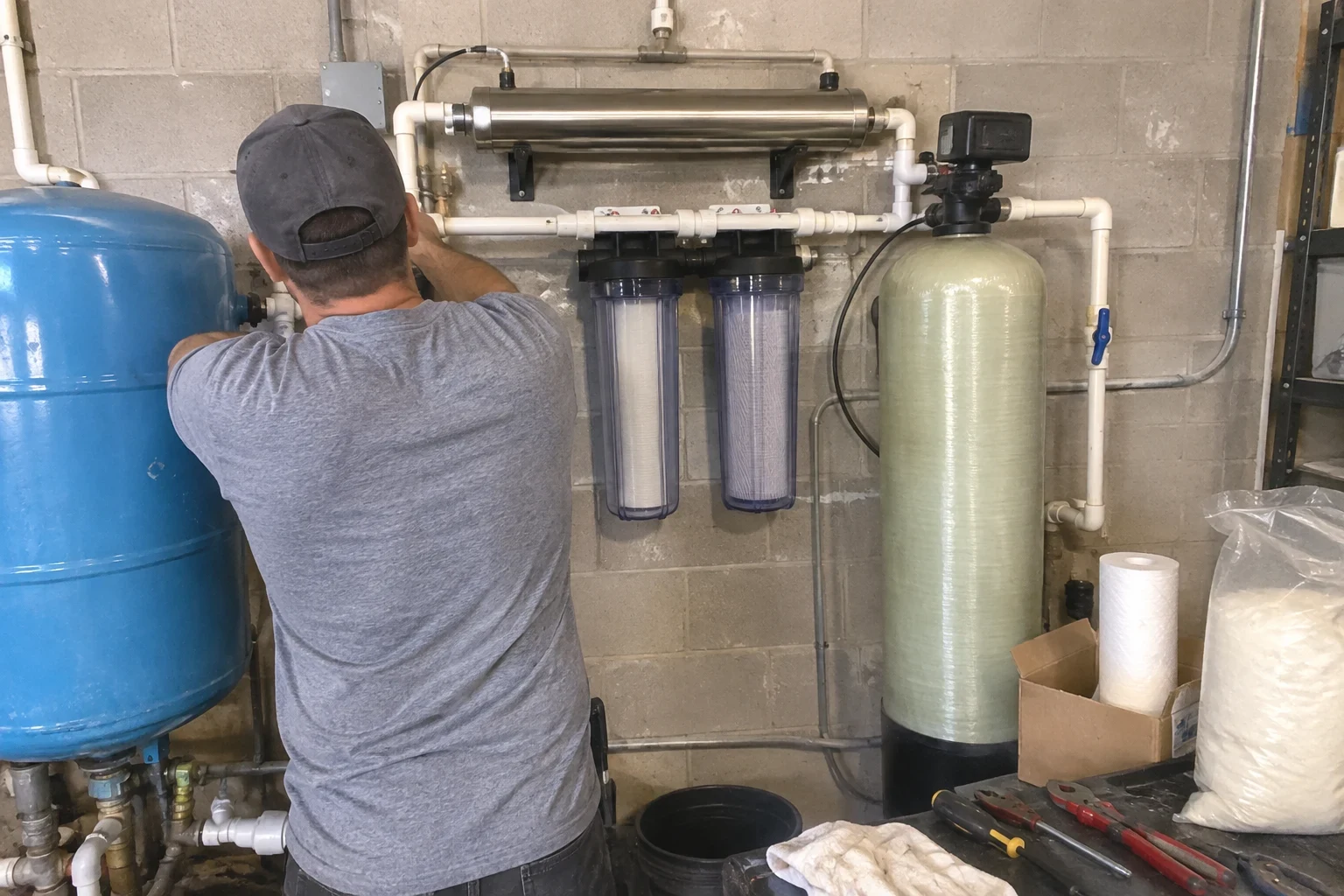
A private well hands you water straight from the ground, and around here that ground is largely limestone. The water picks up calcium and magnesium, often some iron, and sometimes hydrogen sulfide, the gas behind the rotten-egg smell. Well water treatment is the set of stages that deals with those problems where the water enters your home, so every tap and appliance gets the benefit.
Most of the work is choosing the right media. Air injection oxidation handles iron and sulfur without chemicals. Catalytic carbon takes out lingering odor and taste. Softening resin removes hardness. A UV lamp addresses bacteria. Each one differs in how much backwash water it uses, how much iron it tolerates and what it needs from you each year, and we go through those differences with you in plain terms.
If your home is on city water instead of a well, our whole-home filtration and chlorine and chloramine removal pages are the better place to start.
What goes into a well system
- Sediment pre-filtration
- A spin-down screen or cartridge housing stops the sand and grit a well pump lifts from the ground. That keeps it away from the control valves and media further down the line, and a clear bowl shows you when it is time to rinse.
- Iron and sulfur removal
- Inside an air injection oxidation tank, a held pocket of air turns dissolved iron and hydrogen sulfide into solid particles. The media bed catches them, then flushes them to a drain on a schedule. No chemical feed is involved, though the tank needs a drain nearby and adequate flow from your pump.
- Hardness control
- When scale is part of the picture, an ion-exchange softener sits after the iron stage. That order protects the resin from iron fouling, one of the most common reasons softeners on wells wear out early.
- UV disinfection
- A stainless steel chamber holding a UV lamp treats bacteria with nothing added to the water. Because it needs clear water to work well, it is always the final stage. Expect a new lamp each year and a quick wipe of the quartz sleeve.
- Tanks, valves and bypass
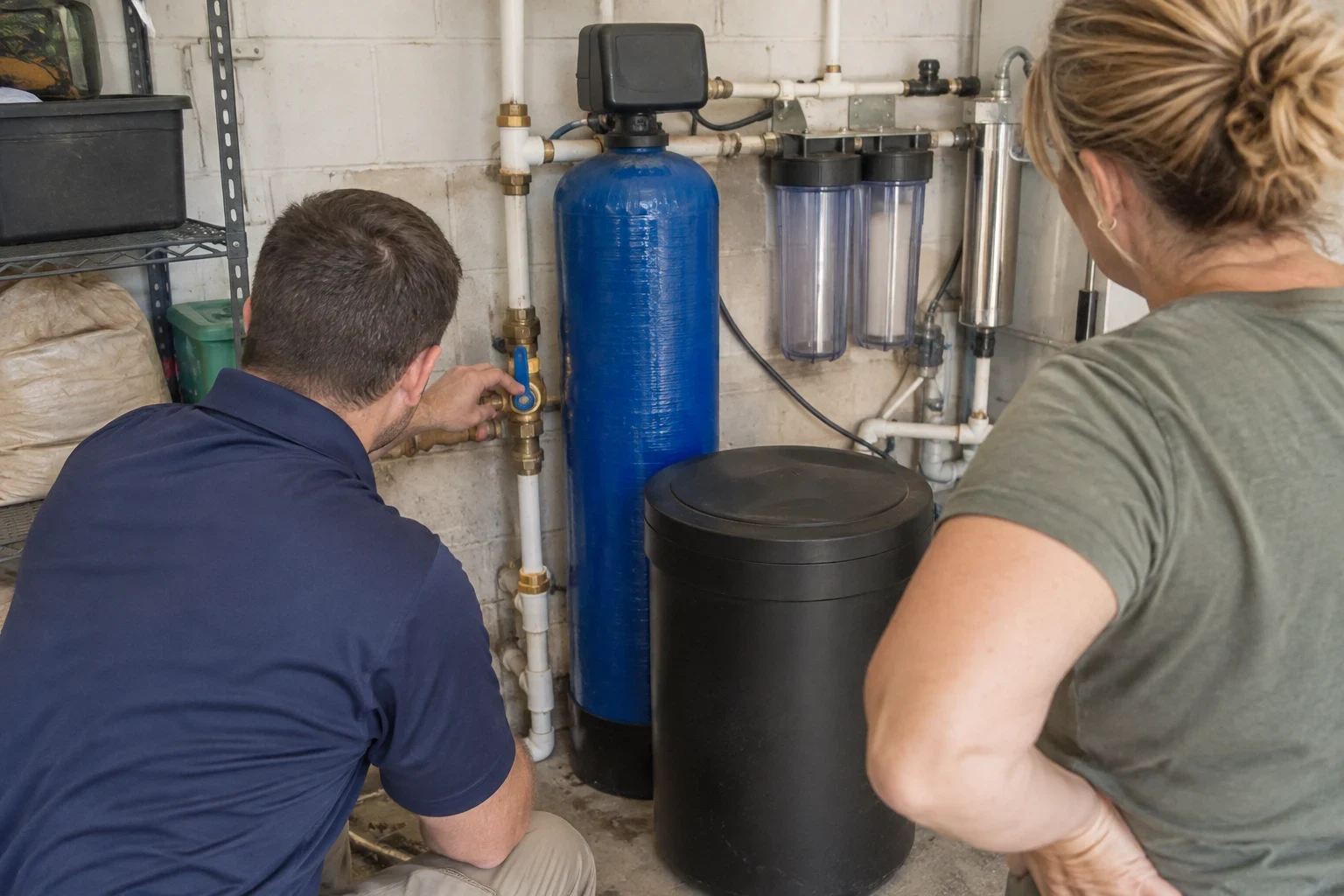
- Our tanks are fiberglass-reinforced shells with polyethylene liners, so there is nothing to rust. Each stage gets a metered control valve, and a bypass lets any one of them be isolated for service while the rest of your home keeps its water.
When a well is telling you something
Water that smells of sulfur
The odor from hydrogen sulfide tends to be strongest at hot taps or first thing after water sits overnight. Beyond the smell, it dulls silver and some fixture finishes.
Rust-colored rings and streaks
Iron marks toilets and tubs in orange and leaves white laundry looking dingy. Irrigating from the well spreads the same staining onto driveways, walls and fences.
Chalky buildup that comes back
Scale on shower glass, inside the kettle and around faucet bases is a sign of hardness. Over time it also cuts into the working life of a water heater.
Sand in screens or the toilet tank
Fine grit clogs faucet aerators and wears valves down. A pre-filter alone often takes care of it.
Dark or slimy film
Black residue in the toilet tank may point to manganese or iron bacteria. Those call for a different media than ordinary iron, so mention it when you reach us.
An older system falling behind
Odor returning or pressure sagging since installation often means spent or undersized media. Our water softener and filtration system replacement service handles changing out equipment that has run its course.
What shapes the cost of well treatment
No two wells carry quite the same water, so the price follows what yours needs and how your home is set up. We itemize every stage on the estimate so you can see where the cost sits and decide what is essential.
What the water carries
Heavy iron or strong sulfur calls for a larger oxidation tank or a second media stage. Mild odor alone can often be handled with less equipment.
Number of stages
A sediment filter and one iron stage cost less than a full line with softening and UV. We explain which stages fix your actual problem and which are optional.
Pump flow and tank size
Bigger households and higher-flow wells need larger tanks so the water keeps pace with showers and irrigation. The pump's output also sets which backwashing media will work.
Location and plumbing
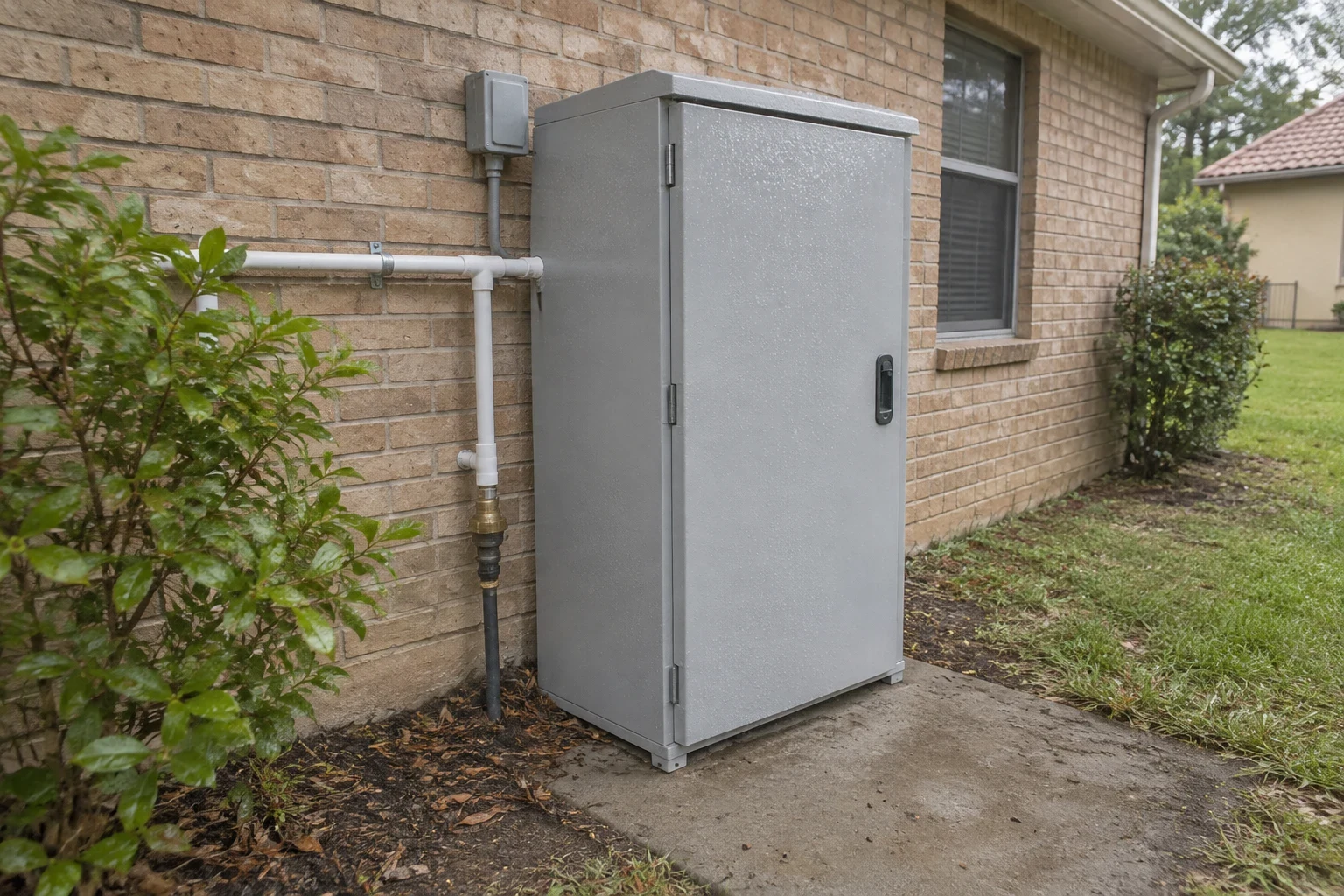
Equipment in a garage beside the pressure tank is straightforward. An outdoor pad, a long drain run or a cover against Florida sun adds materials and time.
From first call to a running system
- 1
Start with what you notice
On the phone, describe the odor, staining or buildup, roughly how old the well is and any equipment already installed. Lab results, if you have recent ones, are useful to have nearby so we can go through them together.
- 2
Site visit and written estimate
At your home we check the pressure tank, measure your pump's flow, locate a drain and size up the space. Backwashing media only cleans itself with enough flow, so this visit narrows the options to the ones that genuinely suit your well. The written estimate lists every stage line by line, with media choices compared.
- 3
The install
Floors get covered first, then the water is shut off and we plumb in the bypass, tanks and drain line. You will know ahead of time about how long you will be without water. Once the valves are programmed, we sanitize and flush everything and haul off packaging and old fittings.
- 4
Handover and support afterward
Before we leave, we walk you through the bypass, the backwash settings and the yearly needs of each stage. Ongoing customer support for maintenance, filter replacements, and service needs stays available after that.
Well water treatment questions
Do I need a water softener along with iron and sulfur removal?
Not always. Some homes mostly struggle with odor and staining, and an iron stage handles both on its own. When chalky scale keeps forming on glass and fixtures, a softener placed after the iron stage is worth considering. We base that on what you are actually seeing, and our water softeners page compares the resin choices.
Will a treatment system lower my water pressure?
A system sized to your pump should cost you only a slight drop that most people never notice. Weak pressure after an install usually traces back to undersized tanks or media that has packed and clogged. That is why we measure your pump's flow during the visit before settling on tank sizes.
How much upkeep does a well system need?
Backwashing tanks clean themselves on a timer or a meter. On your side, the sediment filter gets rinsed or swapped every few months, a softener needs salt, and a UV lamp is changed once a year. We leave you a short schedule, and filter replacements and service are a phone call away.
What warranty comes with the installation?
You get a lifetime warranty on the whole-home treatment tank. Separately, the work our installers do carries a 1-year installation workmanship warranty. At handover we explain what falls under each one.
Can you work with equipment that is already on my well?
In many cases, yes. A tank or valve in good shape can be rebedded with fresh media, or we can add the stage that is missing. If something is past its useful life, we show you why and price a replacement so you can weigh both routes.
Choose your well media with the trade-offs in view
Describe the smell, the stains or the scale you are living with, and we will lay out which stages and materials suit your well and your home. You will see the upkeep each option asks for before a single tank is ordered.